
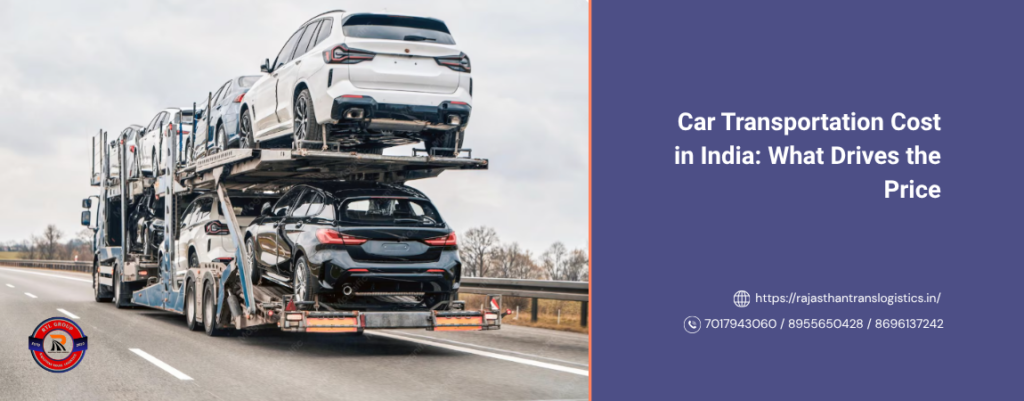
Shifting a car between cities is a different job from moving furniture — it needs a dedicated carrier, careful loading, and its own insurance terms — and it’s priced accordingly. If you’re relocating along with your vehicle, budgeting for car transport as a separate line item from household shifting avoids an unpleasant surprise later.
What Determines Car Transport Charges
Distance between pickup and drop is the starting point for any quote, but several other factors adjust it. Vehicle type and size matter — a hatchback is cheaper to move than a full-size SUV or a luxury car, since larger vehicles take up more carrier space and weight allowance. Carrier type, open versus enclosed, is one of the bigger swing factors. Route accessibility also plays a role: metro-to-metro routes such as Delhi to Mumbai tend to be more competitively priced than trips to smaller towns, which can involve an empty return trip for the operator. Season and demand affect pricing too, and so do your choices around insurance and door-to-door delivery.
Typical Car Transportation Cost in India
Based on current 2026 pricing across established operators, most quotes for common intercity distances fall between ₹5,000 and ₹20,000, working out to roughly ₹10–₹25 per kilometre depending on vehicle size and the operator. Longer moves of 1,500 kilometres or more, or transporting a larger SUV or a luxury vehicle, can push the cost toward ₹30,000–₹45,000. These are indicative ranges — always confirm the exact figure against your specific route and vehicle with a written quote.
Open Carrier vs Enclosed Carrier
An open carrier, where the car travels exposed on a multi-vehicle trailer, is the cheaper and more commonly used option, and it’s perfectly adequate for most everyday vehicles. An enclosed carrier costs roughly 20–40% more but fully shields the car from dust, weather, and road debris during transit, which is worth considering for a new car or a high-value vehicle where cosmetic condition matters more. For most standard sedans and hatchbacks moving a routine distance, open transport is the practical default.
What’s Usually Included (and What to Ask About)
Basic transit insurance is often included in the base quote, but the declared value and specific exclusions vary between operators, so it’s worth asking directly rather than assuming full coverage. Door-to-door pickup and delivery may cost more than a terminal-to-terminal option where you drop off and collect the car yourself. Ask whether tracking is available while the car is in transit, and get an estimated delivery window in writing rather than relying on a verbal promise, since transit times can shift with route conditions.
Tips to Get a Fair Price
- Collect quotes from at least two or three operators for the same route and vehicle before booking.
- Choose an open carrier unless your car specifically needs enclosed protection — it’s the more cost-effective default for most situations.
- If your travel dates are flexible, avoid booking during the busiest relocation months, broadly March to June and around major festivals, when demand pushes rates up.
- Photograph the car from all angles before handover, purely as your own record in case a dispute comes up later.
Frequently Asked Questions
Is car transportation cheaper by train or by carrier truck?
Rail-based car transport through Indian Railways’ parcel service can be cost-effective on certain routes, though scheduling is more rigid than a road carrier. It’s worth comparing both if your dates allow flexibility.
Does my car insurance cover damage during transport?
Not necessarily — a regular motor insurance policy may not automatically extend to transit damage, so check what the mover’s own transit insurance covers rather than assuming your existing policy applies.
How long does interstate car transport usually take?
It depends on the specific route, distance, and the operator’s schedule, so it’s best to ask for a concrete delivery window in writing rather than assuming a fixed number of days.
The Takeaway
Car transport pricing looks simple on paper — distance multiplied by a per-kilometre rate — but carrier type, vehicle size, and route accessibility can all move the final figure by a fair margin. A written quote that spells out the carrier type, insurance terms, and delivery window remains the simplest way to avoid disputes once your car is already on the truck. Movers such as RTL Group, which handle vehicle transport alongside household relocation across multiple Indian cities, can provide a route-specific quote spelling out the carrier type and insurance terms upfront. If you’re relocating and need your vehicle moved along with your household goods, RTL Group can quote both together so you have one clear, written breakdown to work from.